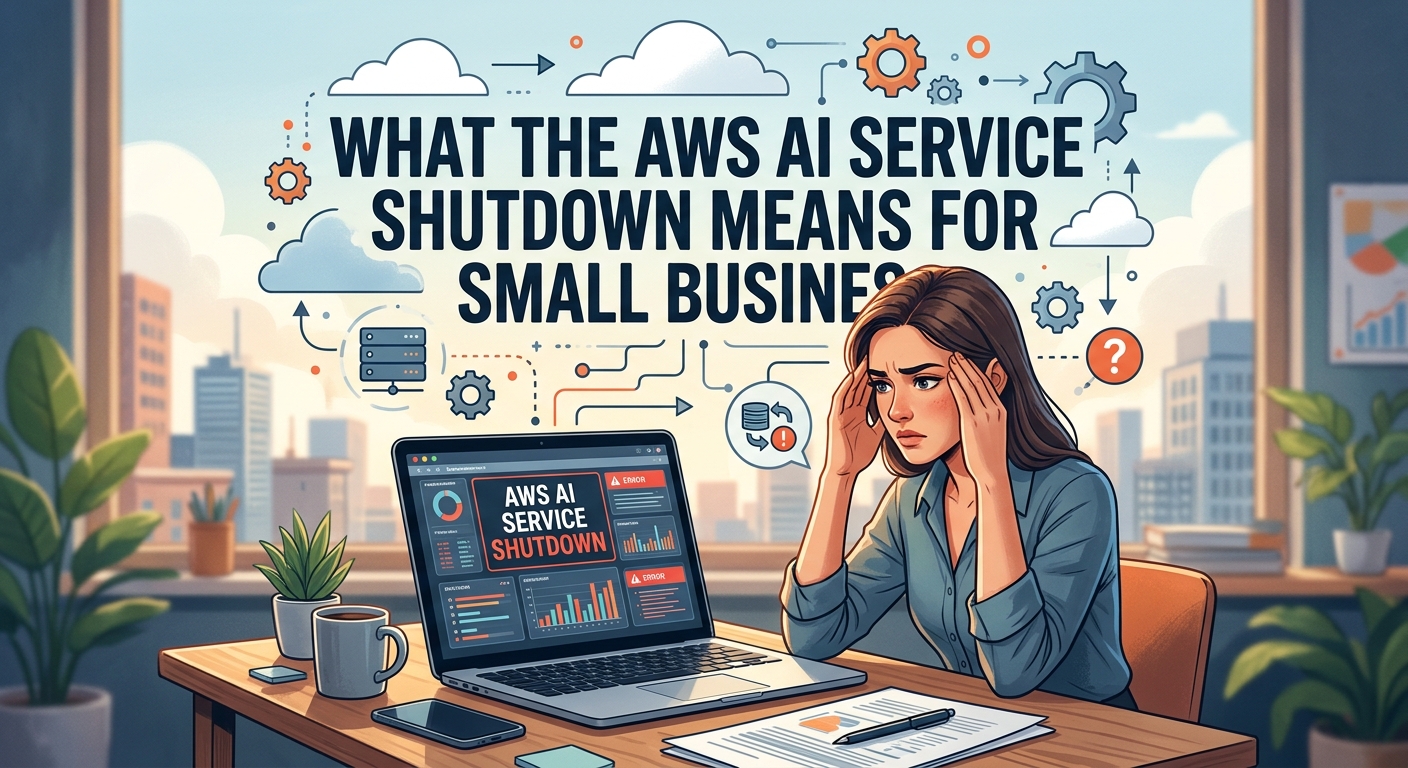
What the AWS AI Service Shutdown Means for Small Business — And Why It Should Change How You Evaluate Cloud Tools
- Mussawwir Sterrett
- August 31, 2026
- IT Pulse
- AI tools small business, Amazon Kendra, AWS, cloud strategy, vendor lock-in
- 0 Comments
On June 30, 2026 Amazon Web Services published what looked like a routine maintenance update on their website. Most small business owners never saw it and people advising small businesses never mentioned it either.
AWS moved Amazon Kendra, Amazon Q Business, and Amazon Bedrock Agents into maintenance mode with new customer sign-ups ending July 30, 2026. Ten Amazon SageMaker AI features went the same way including Clarify, Model Monitor, Ground Truth, Debugger and Profiler.
In plain English, AWS launched these AI products, convinced businesses to build workflows and processes on them, and then closed them to new customers less than three years later in some cases.
Why Small Businesses Should Pay Attention
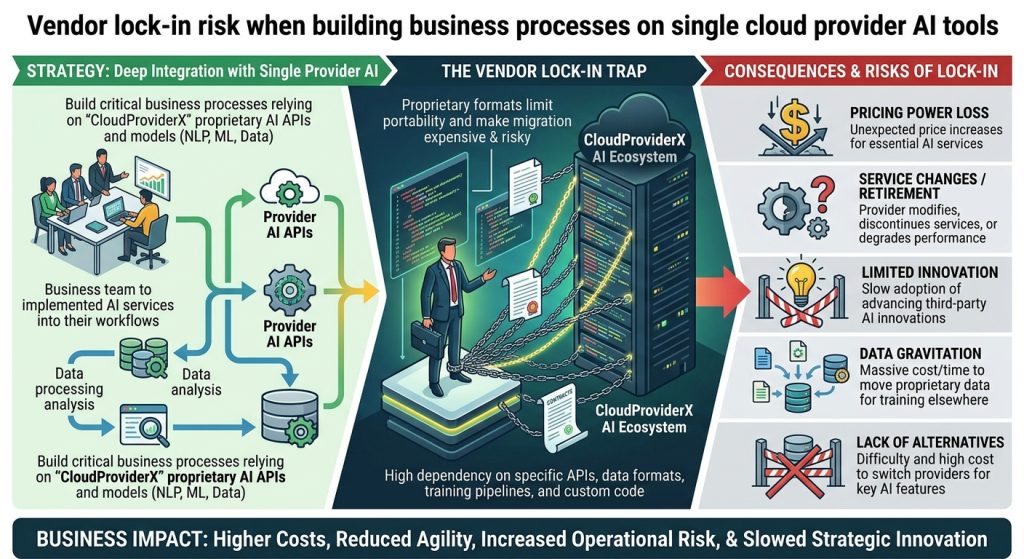
The technology press covered this story primarily from an enterprise perspective focusing on large organizations with dedicated IT departments and cloud architects who can manage a migration project. But the lesson applies equally to small and mid-sized businesses, and the risk is arguably higher for smaller organizations.
A large enterprise that built on Amazon Kendra has an IT team that can execute a migration to Bedrock Knowledge Bases. They have the technical resources to navigate the gaps. Kendra ships 32 native connectors while Bedrock Managed Knowledge Base ships only 7 meaning six Kendra capabilities have no direct equivalent in the replacement at all.
A small business that built customer service workflows or internal search on Q Business does not have that same migration capacity. They are dependent on their vendor or their IT advisor to navigate that transition and often on a timeline and budget they did not plan for.
Bedrock Agents was launched in November 2023 and lasted just 2 years and 8 months before being closed to new customers (like really?). That is not enough time for a small business to fully implement, train their team on, and recover their investment in a new AI platform let alone budget for a migration to whatever replaces it.
The Real Lesson — Vendor Neutrality
This is not an argument against using AWS because they remain the largest cloud provider in the world by a significant margin and their core infrastructure services are mature and reliable. This is portfolio pruning and not an AI retreat. AWS is consolidating its AI offerings onto fewer, more powerful platforms.
But it is an argument for making cloud technology decisions with independent guidance rather than relying solely on a vendor’s recommendations about their own products.
When a vendor recommends their newest AI product they have an obvious incentive to sell it. They do not have an equal incentive to tell you about its product maturity, its likelihood of long-term support, or what your migration options look like if they decide to consolidate it into something else in two years.
An independent technology advisor one with no AWS affiliation, no Google Cloud affiliation, and no Microsoft affiliation evaluates cloud tools based on what fits your business requirements and your risk tolerance. That includes asking questions vendors do not volunteer answers to. How long has this service been in production? What is the migration path if it gets retired? How dependent will our workflows be on this specific product versus the underlying platform?
Three Things to Do Right Now
If your business uses any cloud-based AI tools from any provider three practical steps are worth taking this month.
First — inventory every cloud AI tool your business currently uses and identify which vendor provides it. If any of them were launched in the last two or three years by AWS, Azure, or Google Cloud they are worth monitoring for product lifecycle announcements.
Second — ask your IT advisor or vendor directly: what is the migration path if this service gets retired? If they cannot answer that question clearly that is important information.
Third — evaluate whether your most critical business workflows have a dependency on a single vendor’s AI product that would create a crisis if that product was retired with 30 days notice. If the answer is yes that dependency is a business continuity risk worth addressing now rather than later.
The AWS AI service shutdown of July 2026 was not a disaster for most businesses. But for the businesses that built deeply on Kendra, Q Business, or Bedrock Agents without a migration plan it was an expensive and stressful surprise that could have been anticipated with better vendor-neutral guidance upfront.
Read the full analysis: Here and the video https://www.youtube.com/shorts/zNgihz_yaM0
Source: AWS Service Availability Updates — aws.amazon.com
Related Posts